
- Investment Magazine - http://investmentmagazine.com.au -

Solar flair:
the rise of Sunsuper

Posted By Simon Mumme On 21/05/2012 @ 9:42 am In Fiduciary Duty | 2 Comments

In late 2005, Sunsuper trustee Peter Annand spoke frankly with the fund’s new chief investment officer. “He said the fund is $6.5 billion and growing and that we have to set up some delegations,” recalls David Hartley, who has been Sunsuper’s CIO for more than six years now. “At the time, every investment decision was a board decision.”

The Milton, Brisbane-based industry fund has more than tripled in size and now manages $19 billion. Its investment team has grown to five portfolio managers and nine analysts. The team, tasked with implementing the investment strategy set by the fund’s board, has been assigned duties that once fell to Annand, who was then chair of its investment committee, and other trustees. “The investment committee has to be focused on governance,” Hartley says. Day-to-day matters, such as keeping track of enlisted fund managers and others pitching to win investment mandates, can distract them. “I’ve seen a lot of fund manager beauty parades over the years. How you determine your choice of manager on the basis of a 30-to-40-minute presentation is hard. That’s $200 million swinging on people you’ve never met.”

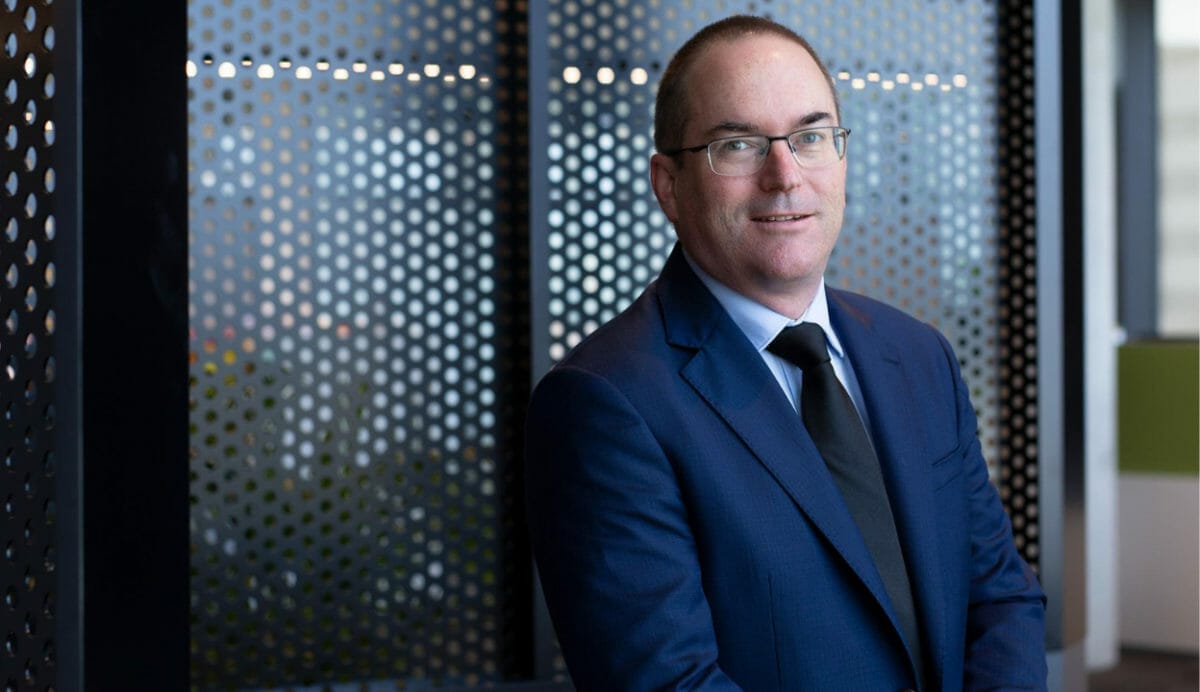
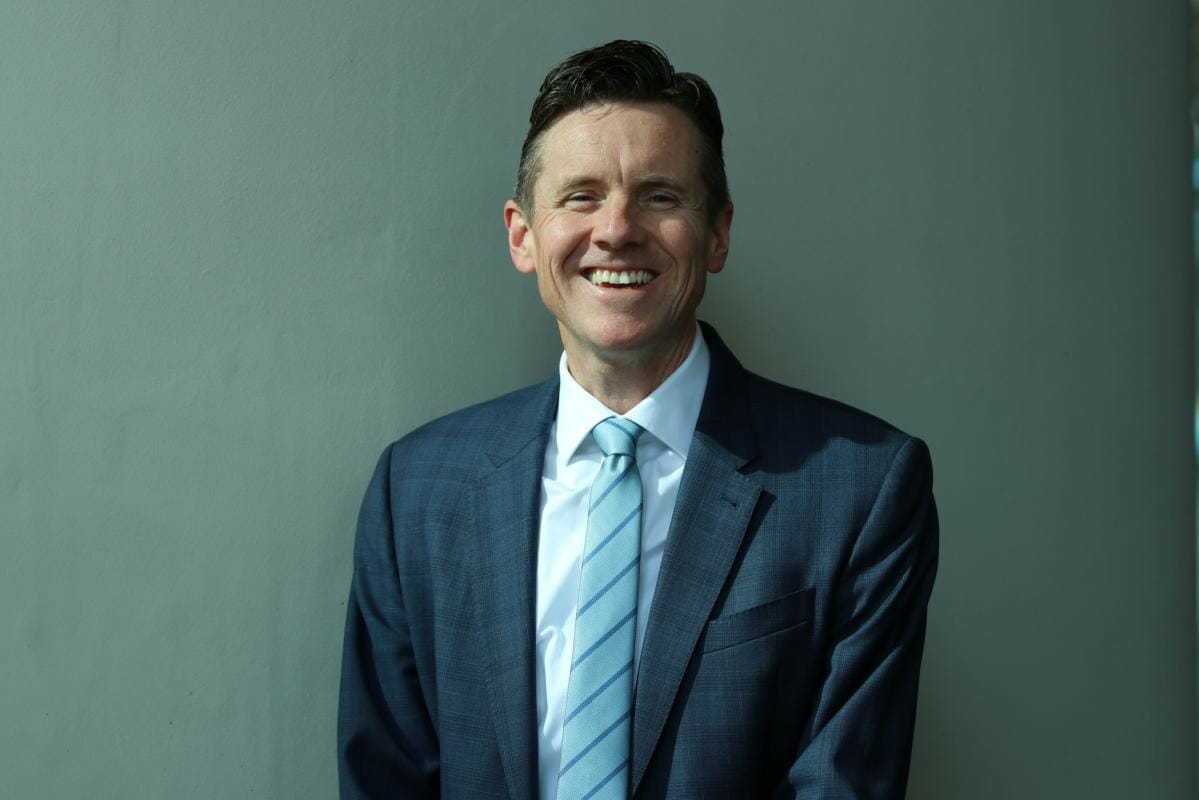
We’re speaking in the Plato meeting room at Sunsuper’s investment office on Hunter Street in central Sydney. Neighbouring rooms bear capitalised surnames of Western intellectuals who have “changed the way people think” such as Da Vinci, Einstein and Keynes. A signed souvenir photo of Cathy Freeman crossing the finish line to win the women’s 400-metre sprint final at the 2000 Olympic Games in Sydney hangs on the bright orange wall behind Hartley. Less than 10 minutes after being photographed outside Australia Square for this story, he is relaxed, his pale bronze and blue-striped tie and black pinstriped jacket already hang on the back of the vacant chair beside him.

In addition to selecting managers, his team has rein to make opportunistic investments without board approval. They also execute co-investments. If, for instance, a privatemarket fund manager running Sunsuper money has reached capacity, the team can use the manager’s research and due diligence at no extra cost to make their own investments in similar deals. Such transactions include the fund’s 2008 co-investment with The Sentient Group to buy 11.8 per cent of Australian geothermal energy start-up Geodynamics.

Despite Sunsuper’s strong growth, it can still make small and opportunistic investments that can potentially boost the large fund’s headline return, Hartley says. “We’re big enough to be meaningful for investment managers and small enough to be interesting with investment strategy.”

[1]

Whole-of-fund focus
Selecting managers and striking opportunistic deals are not the most satisfying activities for the team, Hartley says. It’s the way separate investments “hang together” to form a portfolio.

Sunsuper has culled its number of investment options from 30 to 20 as it has grown. The investment team’s performance goals are linked to the performance of each option and the total fund rather than specific investments. “We deliberately view the fund as a whole,” Hartley says.

Its SunTracker program encourages members to consult Sunsuper financial planners to define their retirement savings goals and set plans to achieve them. “Members don’t say they want inflation plus 4 per cent. They want enough savings to buy a caravan when they retire or to get income,” Hartley says. But not all funds share members’ objectives.

“The problem that funds can have is that they focus on a strategic asset allocation as their goal. But you can beat that by a long way and still not meet objectives for members.”

Sunsuper’s administration division, a business unit called Precision Administration Services, compiles member “personas” that group people with common age, income and current super savings of members. The fund provides each group with specific information related to their goals.

“Investment is a really important part of retirement outcomes – but it’s only a part,” Hartley says. “It’s probably more fundamental to have members in the right investment option at the right time. That has a huge impact.”


Internal management
Funds aiming to invest money themselves should thoroughly assess their motives for doing so. Seeking higher net returns is a good reason. Reducing investments costs alone is not. “The focus that you have to have is on returns for members. If you believe that internal management can give you better net returns, you should consider it,” Hartley says. “It can’t be all about fees.”

But funds staffing talented investment professionals risk losing them to competitors offering better pay. “If you have a team that’s doing it very, very well and you’re paying them less than what they can get paid outside, they could use you as a training ground.” Sunsuper has no current plans to insource fund management.

Before joining Sunsuper, Hartley worked as an investment consultant and fund manager at companies including Schroder Investment Management and UBS Global Asset Management. He says a clear contrast between the focus of not-for-profit and commercial funds is clear. “We’re charging members $52 a year plus a basis-point fee. It’s not much. For that they get 20 investment options, zero buy-sell spread, good financial advice and group insurance.”

Sunsuper aims to make 5 per cent profit after costs. If it gains more, it considers how this money can be used to improve services, Hartley says. “If a commercial organisation makes 10 per cent, it asks how it can make 20 per cent next year.”


Alternatives
In August 2011, when Sunsuper’s investment committee carried out its annual review of the fund’s hedge fund investments, the portfolio had returned 5.8 per cent in the previous three years. Its cash benchmark notched 4.8 per cent, while the hedge fund-of-fund index published by HFR posted 2.2 per cent.

Sunsuper aims for minimal market exposure, or beta, from its $1 billion in hedge fund investments. It draws advice from hedge fund consultant Aksia to select individual managers rather than invest in hedge fundsof- funds, which oversee portfolios of strategies.

“If there’s too much beta, we get rid of it,” Hartley says. The fund currently invests with 17 hedge fund managers, most of which are based in the US. It has also mandated Oaktree Capital Management, which manages about US$85 billion in distressed debt assets, and Lone Star Funds, with about US$33 billion under management, to seek investments arising from European banking reform.

Basel III regulations, which are forcing the region’s banks to hold more liquid assets, are causing them to trim lending books. “Borrowers have been able to maintain their repayments, but they have to find new money. There is an opportunity for direct investors to step in,” Hartley says.


Article printed from Investment Magazine: http://investmentmagazine.com.au

URL to article: http://investmentmagazine.com.au/2012/05/solar-flair/

URLs in this post:

[1] Image: http://investmentmagazine.com.au/wp-content/uploads/2012/05/Fee-Disclosure-Loopholes1.jpg

Copyright © 2012 Investment Magazine. All rights reserved.